
Benton Park
PARK AMBASSADORS: Cristina Cousins and Dustin Turpin
Benton Park is a small park of 14.30 acres located in St. Louis City, established in 1866. The park is nestled into a neighborhood of the same name, which surrounds the park on the north, east, and south sides. Benton Park includes a man-made lake and a smaller man-made pond (both of which are home to wildlife), many mature trees, and two native gardens. Opportunities for stewardship projects include garden maintenance, litter clean-up, and tree care.
-

Native Planting
-

Pollinator Garden Maintenance
-

Litter Removal
Community Stewardship Alliances’ Impact on Benton Park
At Benton Park, natural features and community stewardship come together in the heart of the city. Surrounded by its namesake neighborhood, the park includes a man-made lake, a smaller pond, mature tree canopy, and native plant gardens that provide important habitat for urban wildlife. Through ongoing restoration and stewardship efforts, Community Stewardship Alliance partners and neighborhood volunteers are working to preserve and strengthen this valuable urban ecosystem while keeping the park welcoming and accessible for the surrounding community.
A major focus of restoration efforts at Benton Park is improving habitat for pollinators and other wildlife through native plantings. Two native pollinator gardens provide essential food and shelter for bees, butterflies, and other beneficial insects. By using regionally appropriate native plants, these gardens support species that thrive in local ecosystems, helping improve pollination, increase plant diversity, and strengthen the broader urban food web. Native pollinator habitats are especially important in cities, where habitat fragmentation and development often limit resources available to wildlife.
Community volunteers also participate in regular litter cleanups that help reduce pollution and protect both terrestrial and aquatic habitats within the park. Trash can negatively impact wildlife, degrade water quality, and reduce the overall health and beauty of public green spaces. These stewardship efforts help create a cleaner and healthier environment for both park visitors and local ecosystems.
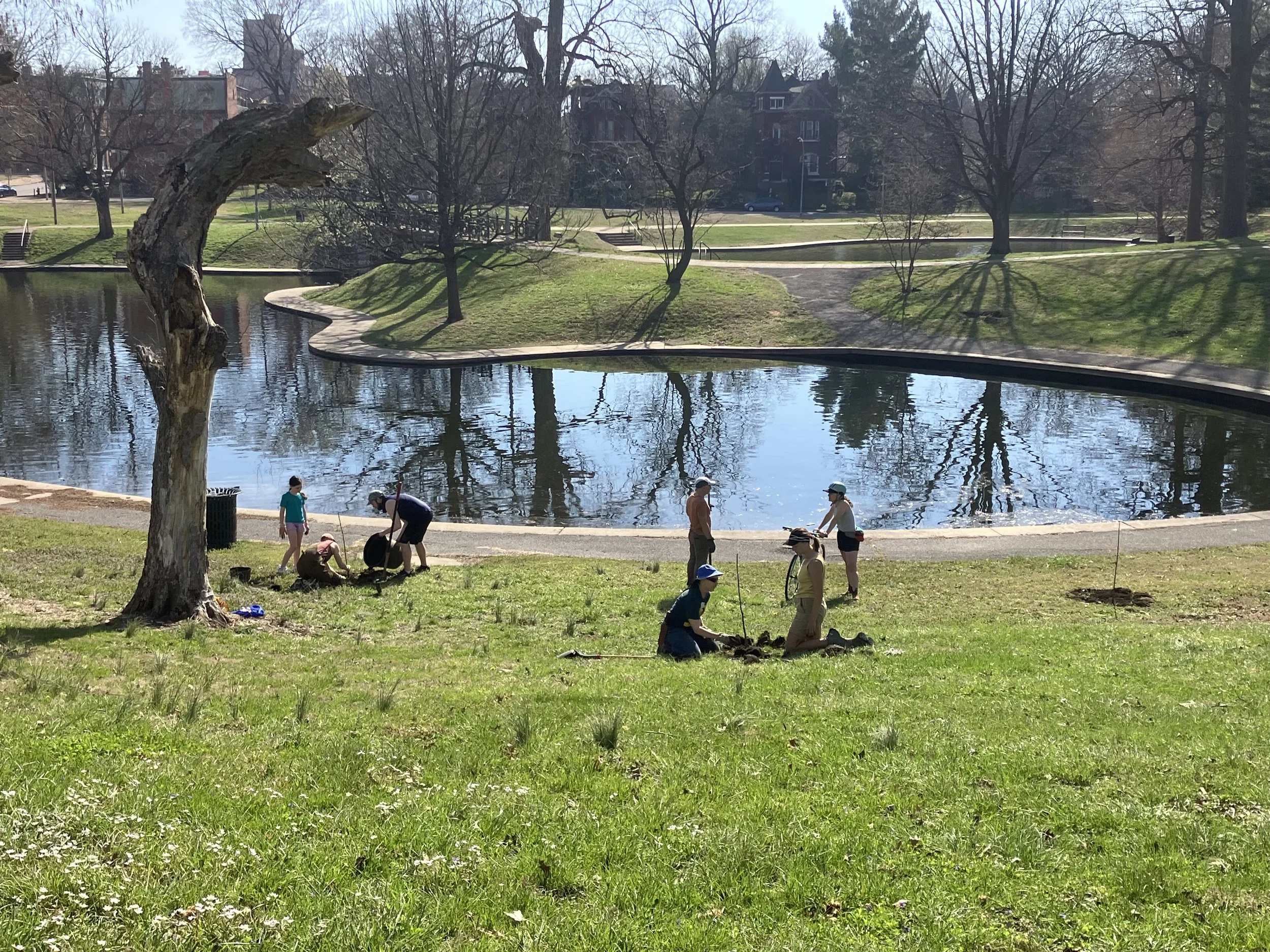
Recent tree initiatives, supported by a Missouri Department of Conservation grant, are also helping expand and diversify Benton Park’s canopy through new native tree plantings. In urban environments, trees provide critical ecological benefits by improving air quality, reducing stormwater runoff, lowering urban heat through shade, and creating habitat for birds and other wildlife. Replacing removed trees with multiple native species also increases the park’s long-term resilience, helping it better withstand pests, disease, and climate-related stressors.
Together, these restoration and stewardship projects demonstrate how even small urban parks can serve as vital ecological areas. By improving biodiversity, supporting pollinators and wildlife, enhancing environmental health, and fostering community involvement, Benton Park continues to provide meaningful ecological and social benefits for the surrounding neighborhood and the city as a whole.